Why Data Validation Matters When Building Reliable Software Applications
Data is the foundation of almost every software application, from online registration forms and shopping platforms to business management systems and mobile applications. However, collecting information is not enough. Applications must also ensure that the information they receive is accurate, complete, and appropriate for its intended purpose. This is where data validation becomes an essential part of software development.
Data validation refers to the process of checking information before an application accepts, stores, or processes it. These checks help developers identify missing fields, incorrect formats, unexpected values, and other input problems. By establishing clear validation rules, programmers can improve data quality, reduce processing errors, and create applications that behave more consistently.
1. Understanding The Role Of Validation
Every application receives information from users, databases, connected services, or other software components. Without proper validation, incorrect or incomplete information can enter the system and affect its functionality. For example, a registration form might accept an invalid email address, while an appointment application could allow users to select a date that has already passed. Such mistakes can create confusion and unnecessary corrections.
Data validation helps prevent these situations by checking whether submitted information follows predefined rules. Developers can verify required fields, confirm acceptable character limits, check numerical ranges, and ensure that dates follow the expected format. These checks establish a clear standard for incoming information, allowing applications to process data more accurately and deliver more predictable results across different operations.
2. Improving Accuracy Across Data Systems
Accurate information helps software applications perform their intended functions without unnecessary complications. When invalid values enter a database, they can affect reports, calculations, search results, and automated workflows. For instance, an inventory application that accepts negative stock quantities may display misleading product availability. Similarly, inconsistent customer details can create duplicate records and make information difficult to manage efficiently.
Validation rules help maintain consistency by ensuring that information meets specific requirements before it moves through the system. Developers can combine field-level checks with database constraints to identify problems at appropriate stages. These measures make records easier to maintain, improve the quality of stored information, and help teams make decisions using data that better reflects actual business activities and application requirements .
3. Strengthening Security Through Input Checks
Data validation also contributes to application security by restricting unexpected or improperly formatted input. Information entered into a form should never be treated as automatically trustworthy, even when it appears harmless. Poorly handled input can expose weaknesses in application logic, database queries, and other processing components. Developers must therefore consider how different types of input could affect system behaviour.
Effective validation includes checking permitted characters, enforcing appropriate length limits, confirming expected data types, and rejecting values that violate defined rules. However, validation alone cannot prevent every security threat. Developers should also use parameterized database queries, context-aware output encoding, and suitable access controls. Combining these practices creates stronger protection while helping applications handle incoming information more carefully and consistently.
4. Building Better User Experiences Through Validation
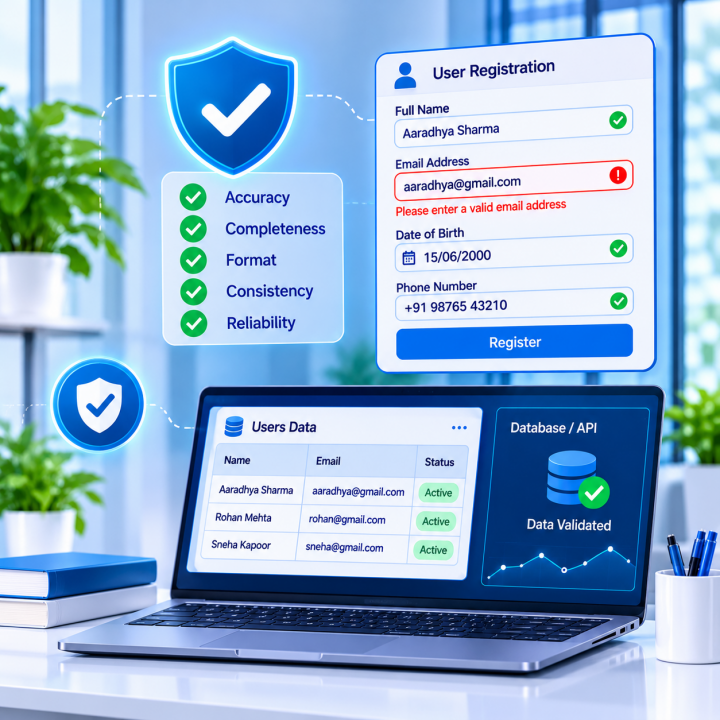
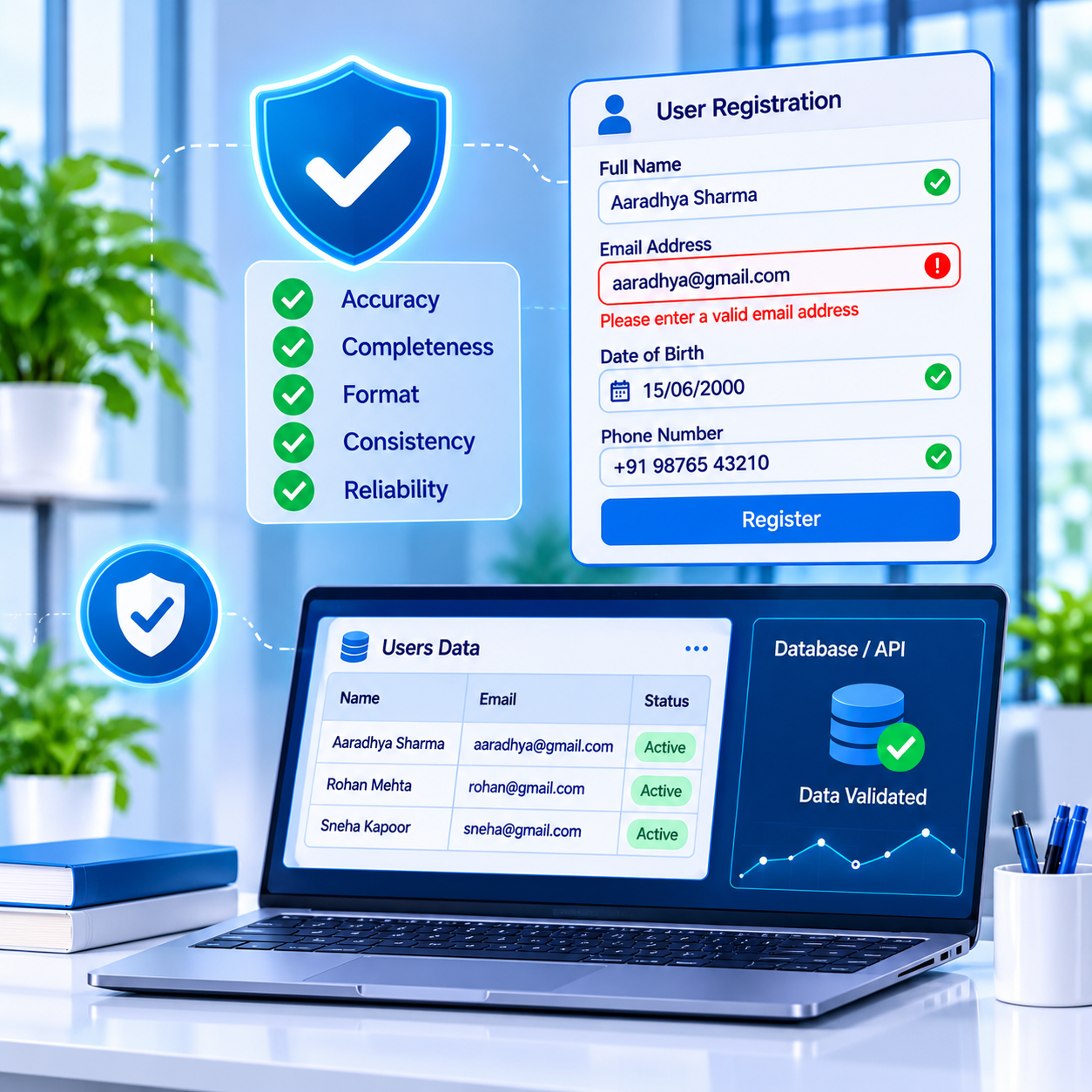
Well-designed validation makes applications easier to use by helping people correct mistakes without unnecessary frustration. Instead of displaying a generic error after submission, software can identify the specific field that needs attention and explain how to resolve the issue. For example, a password form might clearly describe its required length, while a contact form could highlight an incorrectly formatted email address before submission.
Developers should provide helpful messages, preserve correctly entered information, and validate fields at appropriate moments. Testing different input scenarios also helps reveal confusing instructions and unexpected behaviour. When validation is clear, consistent, and thoughtfully implemented, users can complete tasks with greater confidence. Ultimately, effective data validation supports accurate records, dependable functionality, stronger security practices, and more reliable software applications.